Scaled a proven winner
A top-performing hero Sponsored Products campaign was underfunded. Daily budget increased from $10/day to $25/day so Amazon had more room to spend where performance was already proven.
 Automation review
 Case study · Ecommerce operations
S7 Automations connected Amazon Ads, SKU performance, inventory planning, and fulfillment routing into one operating layer — helping PartsDoctor decide where to scale ads, where to cut waste, and which SKUs should move through AWD, FBA, or split shipments.

The challenge
PartsDoctor had the classic ecommerce scaling problem. Amazon Ads showed campaign performance. Seller Central showed inventory and fulfillment constraints. SKU profitability lived in separate exports. Search terms showed demand — but not whether the business should actually push inventory behind that demand.
The account had grown into a large operating surface: thousands of campaign, keyword, product-target, and search-term records; hundreds of SKU and inventory records; legacy campaigns accumulated over time; campaigns enabled but not serving; campaigns spending without sales; and SKU winners that deserved more budget but were tied to fulfillment realities nobody had stitched together.
What S7 built
S7 Automations built an API-led ecommerce operations workflow around the PartsDoctor account, connecting Amazon Ads campaigns, Sponsored Products budgets and bids, search-term performance, SKU-level sales and demand signals, inventory status, FBA replenishment logic, AWD vs FBA routing, human-readable audit reports, and verified API readbacks after every change.
Instead of treating ads, inventory, and fulfillment as separate jobs, S7 treated them as one operating loop.
Audit
This produced a clearer map of the account: which campaigns were scale candidates, which needed to be paused, which bids needed to come down, which search terms deserved their own controlled test, and which legacy assets should be consolidated before adding more complexity.
Optimization applied
A top-performing hero Sponsored Products campaign was underfunded. Daily budget increased from $10/day to $25/day so Amazon had more room to spend where performance was already proven.
Several campaigns were enabled but either spending without sales or adding low-quality noise. These were paused to reduce waste and clean the active account view.
Multiple campaigns were technically enabled but not serving. Rather than blindly raising bids and creating accidental spend, dead clutter was paused and the account stayed focused.
For a campaign operating at inefficient ACOS levels, product-targeting bids were reduced by ~30% and the ad-group default bid was lowered — keeping the campaign available while reducing overspend risk.
The work did not stop at "API request sent." Updated campaign, ad group, and target states were read back from Amazon’s API to confirm the live account matched the intended changes.
Inventory layer
If a campaign is profitable but inventory is thin, blindly scaling ad spend creates stockout risk. If a SKU has strong velocity and margin, it may deserve deeper FBA or AWD coverage. If a product is slow-moving or high-risk, sending too much inventory into Amazon ties up cash and creates storage drag. The inventory layer classifies SKUs into clear action buckets:
Strong velocity, healthy margin, stable demand, low stockout tolerance, predictable replenishment.
AWD acts as a buffer layer so inventory sits closer to Amazon’s network without forcing every unit directly into FBA at once.
Immediate sales demand, fast turn, profitable ad support, low overstock risk, near-term replenishment need.
These SKUs get prioritized for FBA availability because they convert quickly.
Demand is real but not yet fully predictable.
A portion into FBA for immediate availability, a portion into AWD as buffer, and a portion held back if margin or storage risk is high.
Weak ads, low velocity, high ACOS, thin margin, high stock risk, unclear demand.
Hold inventory, reduce bids, pause ads, or wait for stronger demand signals before sending more stock into Amazon.
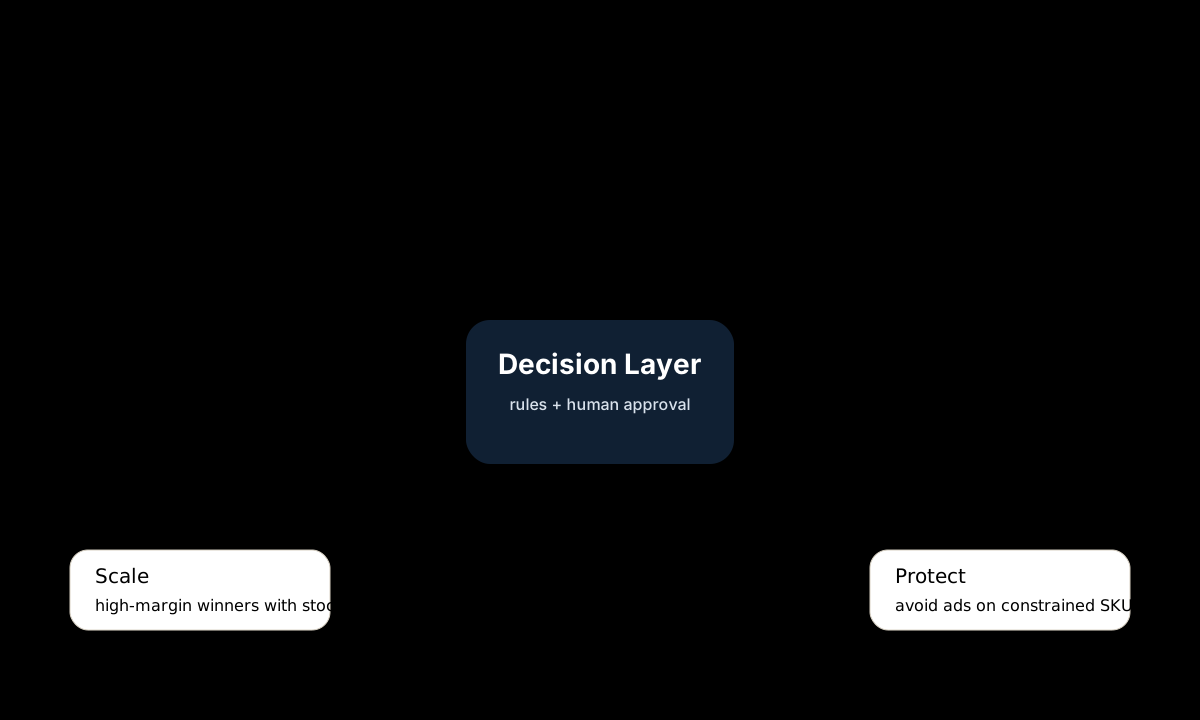
The operating logic
Business impact
Instead of manually checking ads, inventory, reports, and shipment options one by one, the operator gets a decision layer that says things like:
Scope and capacity
Outcome
The broader system can now expand into SKU-level inventory decisions, AWD routing, FBA shipment planning, and split-shipment recommendations.
Apply this to your operation
S7 can build the operating layer between your tools — so ads, stock, fulfillment, and dashboards work from the same logic.
Request an automation review